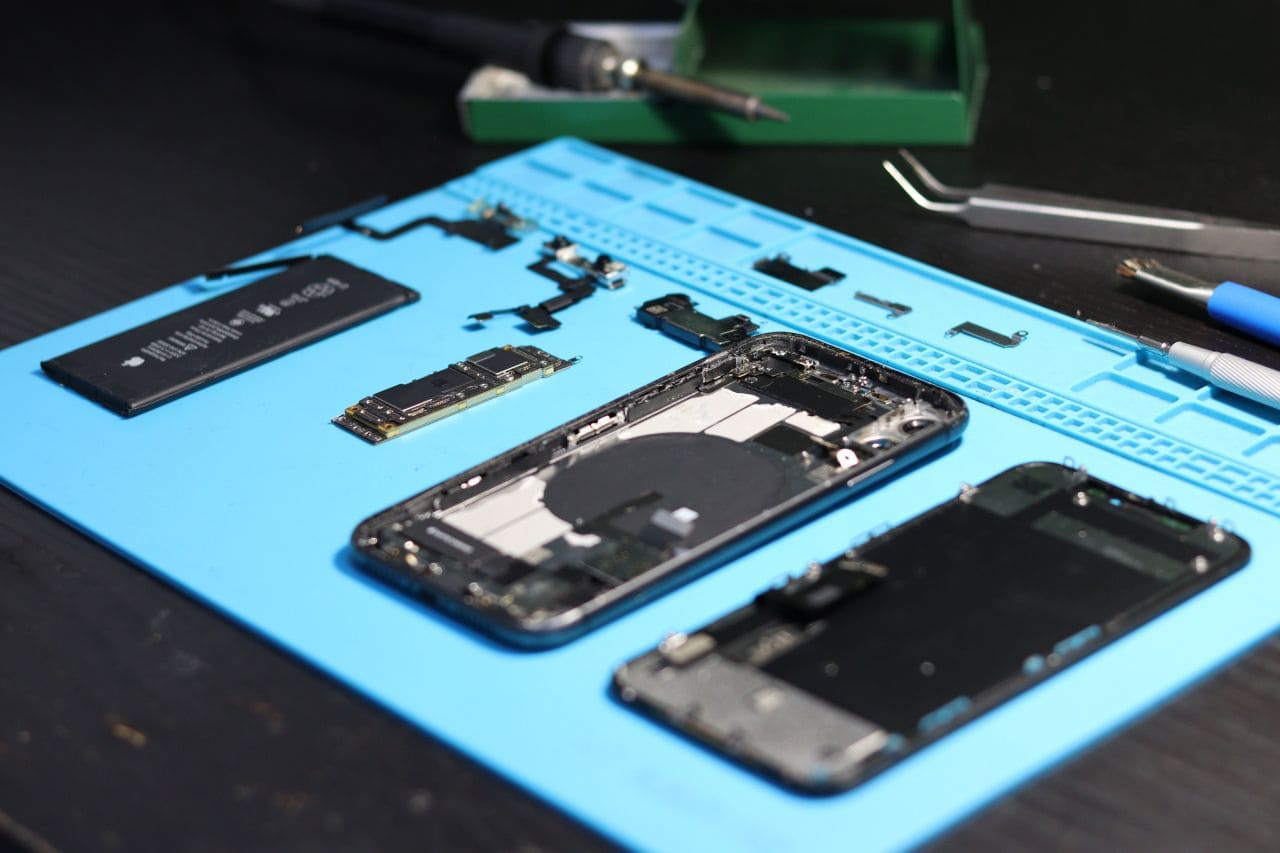
Mumbai is a city where smartphones are used for almost everything – communication, payments, education, business, entertainment and work. Naturally, when phones develop hardware or software problems, there is a steady need for people who know how to diagnose and repair them.
This has made mobile repairing a practical skill-based career option for students, job seekers, working professionals and people interested in starting a small technical business.
But there is an important question to answer before joining a course:
What do you actually learn, how much does the course cost, how long does it take, and can it really lead to a career?
A mobile repairing course in Mumbai can range from a short beginner program to a more advanced course covering motherboard and chip-level work. Fees also vary considerably depending on the duration, practical exposure, equipment and level of training.
This guide explains what you should realistically expect.
First, what does a mobile repairing course actually teach?
Mobile repair is not simply about changing a cracked screen.
A technician may have to determine whether a phone has:
- A damaged display
- A faulty charging port
- A weak or damaged battery
- A software problem
- A charging circuit fault
- A short circuit on the motherboard
- A damaged IC
- A microphone or speaker problem
- Network-related hardware issues
- Water or liquid damage
- A connector or track problem
The repair process therefore has two parts.
Diagnosis comes first. Repair comes second.
For example, if a smartphone is not charging, replacing its charging port immediately may solve the problem. But it may also fail if the actual fault is in the charging circuit, connector, protection component or motherboard.
A trained technician learns to investigate the fault rather than simply replacing parts.
That difference becomes increasingly important as phones become more compact and their internal electronics become more complicated.
How much does a mobile repairing course cost in Mumbai?
There is no single fixed fee for all institutes.
Current course listings and institute websites show substantial variation. For example, some Mumbai institutes advertise courses around ₹10,000 to ₹15,000, while more extensive or advanced programs can cost ₹20,000, ₹35,000 or more.
Prizm Institute currently lists its regular advanced mobile repairing course as a 3-month, 75-hour program, with fast-track options of 45 days and shorter crash-course formats. The institute advises students to confirm the latest fee and batch availability directly. Fees change between institutes and batches. Here are the same details like fees, eligibility and duration all over india you must read to know about pan India.
What are you paying for?
This is one of the most useful questions to ask before admission.
Two institutes may advertise the same course fee but offer very different learning experiences.
Check whether the fee includes:
- Practical laboratory training
- Tools and equipment for practice
- Training on Android phones
- iPhone-related training
- Hardware repair
- Software repair
- Chip-level repair
- Printed notes or study material
- Course completion certificate
- Additional practice time
- Trainer assistance
- Career guidance
- Post-course technical support
Some institutes include learning materials or starter tools as part of their course package. The best mobile repairing institutes in Mumbai are listed here.
Always confirm the current inclusions before paying the fee.
How long does it take to learn mobile phone repair?
This depends on what you mean by “learn.”
Learning how to replace a screen is very different from learning how to diagnose a motherboard fault.
Many Mumbai courses run for approximately 1 months, while advanced programs can extend to 2 or 3 months. Fast-track options are also available at some institutes.
A useful way to look at the learning process is in stages.
Stage 1: Basic repair
You learn:
- Phone opening and closing
- Parts identification
- Battery replacement
- Display replacement
- Speaker and microphone replacement
- Basic charging problems
- Basic testing
This gives a beginner a foundation.
Stage 2: Hardware and software troubleshooting
You start learning:
- Multimeter testing
- DC power supply
- Fault diagnosis
- Software flashing
- Firmware installation
- Software-related troubleshooting
- Connector and component testing
Stage 3: Board-level repair
This is where things become more technical.
You may learn:
- PCB and motherboard structure
- SMD components
- Soldering
- Desoldering
- Jumper work
- Short-circuit detection
- IC identification
- IC replacement
- Reballing
- Circuit tracing
Course completion does not automatically mean mastery.
Practical experience matters enormously.
A student who spends several hours every week practising diagnosis may progress much faster than someone who only attends classroom lectures.
The syllabus: what should a good course cover?
There is no single official syllabus followed by every private training institute.
However, a useful mobile repairing course syllabus should progress logically from basic concepts to practical repair and troubleshooting.
Here’s what you should look for.
1. Electronics fundamentals
You don’t need to be an electrical engineer to start.
A good course should explain concepts such as:
- Voltage
- Current
- Resistance
- Continuity
- Short circuit
- Open circuit
- Polarity
- Basic electronic components
You should also understand components such as:
- Resistors
- Capacitors
- Diodes
- Coils
- Transistors
- ICs
This knowledge becomes important when you move from part replacement to diagnosis.
2. Understanding smartphone hardware
Next comes the phone itself.
Students should learn to identify major components and understand their functions.
These include:
- Motherboard
- Display
- Touch panel
- Battery
- Charging connector
- Cameras
- Microphone
- Speaker
- Vibration motor
- Antenna
- SIM section
- Sensors
- Connectors
- Power and charging circuits
You should also learn how to safely disassemble and reassemble different types of smartphones.
Modern Android phones and iPhones can have very different internal layouts, adhesives, connectors and repair procedures.
The tools matter more than many beginners realize
A mobile technician works with surprisingly small components.
Some commonly used tools include:
- Precision screwdriver set
- Multimeter
- DC power supply
- Soldering iron
- Hot air/rework station
- Microscope
- PCB holder
- Flux
- Solder wire
- Tweezers
- Cleaning tools
- Jumper wire
- OCA-related equipment for display work
Advanced repair may require more specialized equipment.
The important thing is not simply knowing the names of these tools Here is a complete list of mobile repairing tools and machines with their prices to understand before buying them..
You must learn when and how to use them safely.
For example, a multimeter is not just a device for checking whether electricity is present. In repair work, it can help you measure resistance, continuity and voltage and investigate possible faults.
Similarly, a hot-air rework station can be extremely useful but can also damage a PCB, connector or nearby component when used incorrectly.
Hardware repair: where hands-on practice begins
This is usually the part students find most interesting.
You may practise tasks such as:
Display replacement
Understanding how to safely remove a damaged display and install a replacement.
Battery replacement
Learning safe battery handling and proper installation.
Charging connector repair
Understanding the difference between a damaged connector and a deeper charging circuit fault.
Speaker and microphone repair
Testing the component and checking connectors or related circuits.
Button and connector repair
Repairing or replacing damaged switches and connectors.
The objective should not be to memorize repair tricks.
It should be to understand why the fault occurred and how to confirm it.
Software repair is a separate skill
A phone can be physically perfect and still fail to work correctly because of software.
A comprehensive course may therefore cover:
- Firmware installation
- Flashing
- Software updates
- Factory reset procedures
- Boot-loop troubleshooting
- Basic Android software diagnosis
- Recovery and download modes
- Software tools
- Device-specific flashing procedures
- Backup and restore awareness
iPhone software restoration and Android software servicing may involve different procedures and tools.
Software tools also change frequently.
This means a technician has to keep learning even after completing a course.
Then comes chip-level repair
This is usually where a beginner moves into advanced territory.
Chip-level repair means working directly with the electronic circuits and components on the motherboard rather than simply replacing external modules.
Training can include:
- PCB identification
- Circuit tracing
- SMD components
- IC identification
- Short-circuit detection
- Voltage testing
- Soldering
- Desoldering
- Jumper techniques
- IC replacement
- Reballing
- Power section troubleshooting
- Charging section troubleshooting
Some advanced programs also introduce specialized motherboard repairs and memory-related work.
This is not an area where speed should be the goal.
Precision matters.
A small mistake while heating or removing a component can damage tracks, pads or nearby components.
A real repair-shop situation
Consider a customer who brings a smartphone saying:
“The phone was working yesterday. Today it is completely dead.”
A beginner may immediately assume the battery is faulty.
An experienced technician approaches it differently.
First comes visual inspection.
Then the technician checks the battery condition and connector.
If necessary, the technician connects the phone to a DC power supply and observes its behaviour.
The technician may then check for signs of a short circuit, inspect the charging and power sections and test relevant components.
Only after narrowing down the fault does the technician decide what needs repair.
This is the kind of thinking a good course should develop.
Repairing phones is not just manual work. It is problem-solving.
Android and iPhone repair: should you learn both?
Ideally, yes.
Android phones represent a huge range of brands and hardware platforms. Samsung, Xiaomi, Redmi, OnePlus, Vivo, Oppo, Realme and other manufacturers can use different designs and components.
iPhones also have their own architecture, repair procedures and diagnostic considerations.
A good course should therefore expose students to different devices rather than concentrating on one phone model.
However, don’t expect a short course to make you an expert on every model ever produced.
The purpose of training is to build transferable repair skills.
Once you understand electronics, diagnosis and repair methods, learning a new model becomes much easier.
Practical training is the part you should inspect before enrolling
This may be more important than the certificate.
Ask the institute:
“How much practical work will I actually do?”
Then ask:
- Will I work on real phones?
- How many students are there in one batch?
- Are phones provided for practice?
- Can I repeat difficult procedures?
- Will I personally use the soldering equipment?
- Is chip-level practice included?
- Can I practise after class?
- What happens if I make a mistake during practice?
Some institutes specifically advertise practical lab training and access to equipment, while course structures differ considerably between providers.
A practical course should allow you to perform tasks, not just watch the trainer perform them.
Who can join a mobile repairing course?
You generally don’t need an engineering degree.
Many courses are designed for beginners and do not require previous technical experience. Prizm Institute, for example, states that no specific educational qualification or prior technical experience is required for its course.
The course can be suitable for:
- Students after 10th or 12th
- College students
- Job seekers
- Working professionals
- Existing mobile shop owners
- People interested in electronics
- Entrepreneurs
- People looking for a practical technical skill
Basic comfort with computers can be useful, especially when learning software repair.
But curiosity and patience matter more than academic qualifications.
Career scope: where can this skill take you?
Completing a course does not lock you into one career path.
You can potentially work as:
Mobile repair technician
Join a local repair shop, service centre or electronics business.
Smartphone service technician
Work on hardware and software faults in a larger repair environment.
Freelance technician
Take repair work independently after developing enough practical experience.
Mobile repair shop owner
Start a small repair business and gradually expand your services.
Specialist technician
With additional training and experience, you can specialize in areas such as:
- Motherboard repair
- iPhone repair
- Android repair
- Display refurbishment
- Software servicing
- Data-related repair work
- Microsoldering
Trainer
Experienced technicians can eventually teach beginners.
The important distinction is this:
A course gives you a foundation. Experience develops your professional value.
Can mobile repairing become a good business?
It can, but there is no guaranteed income.
Your earning potential can depend on:
- Technical skill
- Type of repairs handled
- Location
- Customer trust
- Spare-parts sourcing
- Repair quality
- Turnaround time
- Competition
- Business expenses
- Ability to handle difficult faults
A beginner may start with simple repairs and gradually move toward more technically demanding jobs.
Someone who eventually becomes proficient at board-level diagnosis may offer services that cannot be handled by a basic phone-accessories shop.
That creates a possible path toward specialization.
But it takes time.
What are the advantages and limitations?
Why people choose mobile repair training
Practical skill: You learn something that can be applied directly.
Relatively short training period: Many courses can be completed in a few months.
Multiple career paths: Employment, freelance work or business are possible options.
Upgradeable skill: You can move from basic repairs to advanced motherboard work.
No engineering degree required: Beginners can start with basic electronics.
What you should not expect
Instant high income: A certificate does not automatically create customers or a high salary.
One course is enough forever: Smartphone technology keeps changing.
Every repair will be easy: Some faults require substantial experience.
You can learn everything in a few weeks: Basic repairs can be learned relatively quickly, but advanced diagnosis takes much longer.
Expensive equipment guarantees skill: Tools help, but diagnosis and technique matter more.
Five mistakes beginners commonly make
1. Starting with chip-level repair
Learn basic electronics and component testing first.
2. Replacing parts without diagnosis
This can waste both time and money.
3. Ignoring safety
Lithium-ion batteries, hot-air equipment and soldering tools require careful handling.
4. Practising only by watching
Watching 100 repair videos is not the same as performing 10 repairs yourself.
5. Stopping after the certificate
The certificate may mark the end of training, but it should be the beginning of continued practice.
How to choose the right institute in Mumbai
Before paying the course fee, compare institutes on these points:
| What to check | Why it matters |
| Course duration | Gives an idea of training depth |
| Practical hours | More important than theory alone |
| Batch size | Smaller groups may allow more individual practice |
| Hardware + software | Gives broader repair capability |
| Chip-level training | Important for advanced repair |
| Equipment | Students should get hands-on access |
| Trainer experience | Practical experience can improve learning |
| Course material | Useful for revision |
| Certificate | Helpful, but should not be the main deciding factor |
| Post-course support | Can be useful when starting out |
| Total fee | Compare what is actually included |
| Location and timings | Important for regular attendance |
Don’t be afraid to visit the institute before admission.
Look at the lab.
Look at the equipment.
Ask to see the syllabus.
Talk to the trainer.
And most importantly, ask how much time you will spend repairing phones.
A sensible learning path for a beginner
If you are starting from zero, don’t try to learn everything simultaneously.
A practical sequence is:
Basic electronics → Phone components → Safe disassembly → Common hardware repairs → Multimeter testing → Software repair → Fault diagnosis → Soldering → Board-level troubleshooting → Chip-level repair
This progression makes advanced concepts easier to understand.
It also reduces the temptation to use trial-and-error methods on expensive phones.
Is a mobile repairing course in Mumbai worth it?
For someone who genuinely enjoys technical work, it can be a useful investment.
Mumbai has a large market for smartphones, electronics, accessories and repair services. But the value of a course depends heavily on the quality of training.
A cheap course is not necessarily a good course.
An expensive course is not automatically better either.
The strongest option is usually the one that gives you:
A clear syllabus + experienced instruction + substantial practical work + proper tools + troubleshooting practice.
If your goal is employment, focus on building repair skills.
If your goal is business, learn repair skills along with customer handling, costing, spare-parts sourcing and basic business management.
If your goal is advanced motherboard repair, choose a course that provides genuine chip-level practice rather than simply mentioning “chip-level” in its brochure.
FAQs
1. What is the duration of a mobile repairing course in Mumbai?
It depends on the level. Short programs may last around one month, while comprehensive courses commonly run for two to three months. Advanced programs can take longer. Some Mumbai institutes also offer fast-track options.
2. What is the mobile repairing course fees in Mumbai?
Fees vary by institute and course level. Current advertised prices range from roughly ₹8,000-₹15,000 for some basic programs to ₹20,000-₹40,000 or more for advanced training. Always confirm the current fee and inclusions directly with the institute.
3. Can I learn mobile repairing after 10th?
Yes. Many beginner-oriented courses do not require an engineering background or previous repair experience. Basic electronics is normally introduced during training.
4. Does a mobile repair course include iPhone repair?
It depends on the institute. Many modern courses cover both Android and iPhone repair, but the depth can vary. Ask specifically whether practical iPhone training is included.
5. Is chip-level mobile repairing difficult?
It is more demanding than basic component replacement. It requires patience, accurate testing, soldering skills, microscope work and repeated practice. A structured learning path makes it much easier to understand.
6. Can I start a mobile repair shop after completing the course?
You can potentially start a business after developing sufficient practical skills, but completing a course alone does not guarantee business success. You also need to understand spare parts, pricing, customer service, quality control and local competition.
7. Is mobile repairing still a good career?
It can be a useful skill-based career for people who enjoy electronics and hands-on problem-solving. However, earnings depend on experience, repair capability, location and business or employment conditions. Continuous learning is important because smartphone technology keeps changing.
The real value is not the certificate
A mobile repairing course can teach you the foundation.
But your real progress begins when you start diagnosing phones independently.
At first, you may only be comfortable changing a battery or display. Later, you may diagnose charging faults, trace motherboard problems and work with microscopic components.
That progression takes practice.
If you are comparing mobile repairing courses in Mumbai, don’t ask only:
“How much is the fee?”
Ask:
“How much practical repair experience will I get for that fee?”
That question can help you make a much better decision.
For beginners, the ideal course is one that starts from basic electronics, gradually introduces smartphone hardware and software, and eventually teaches systematic troubleshooting and advanced repair techniques. Current Mumbai programs show that course structures, fees and durations can vary significantly, so comparing the actual syllabus and practical exposure is more useful than comparing price alone.
Mobile repairing is a hands-on profession.
The more you understand why a phone has failed, rather than simply knowing which part to replace, the more valuable your skill becomes.
That is what turns mobile repair training into a real technical career.