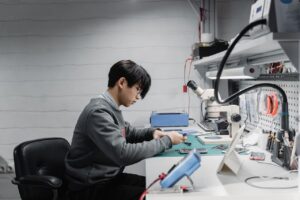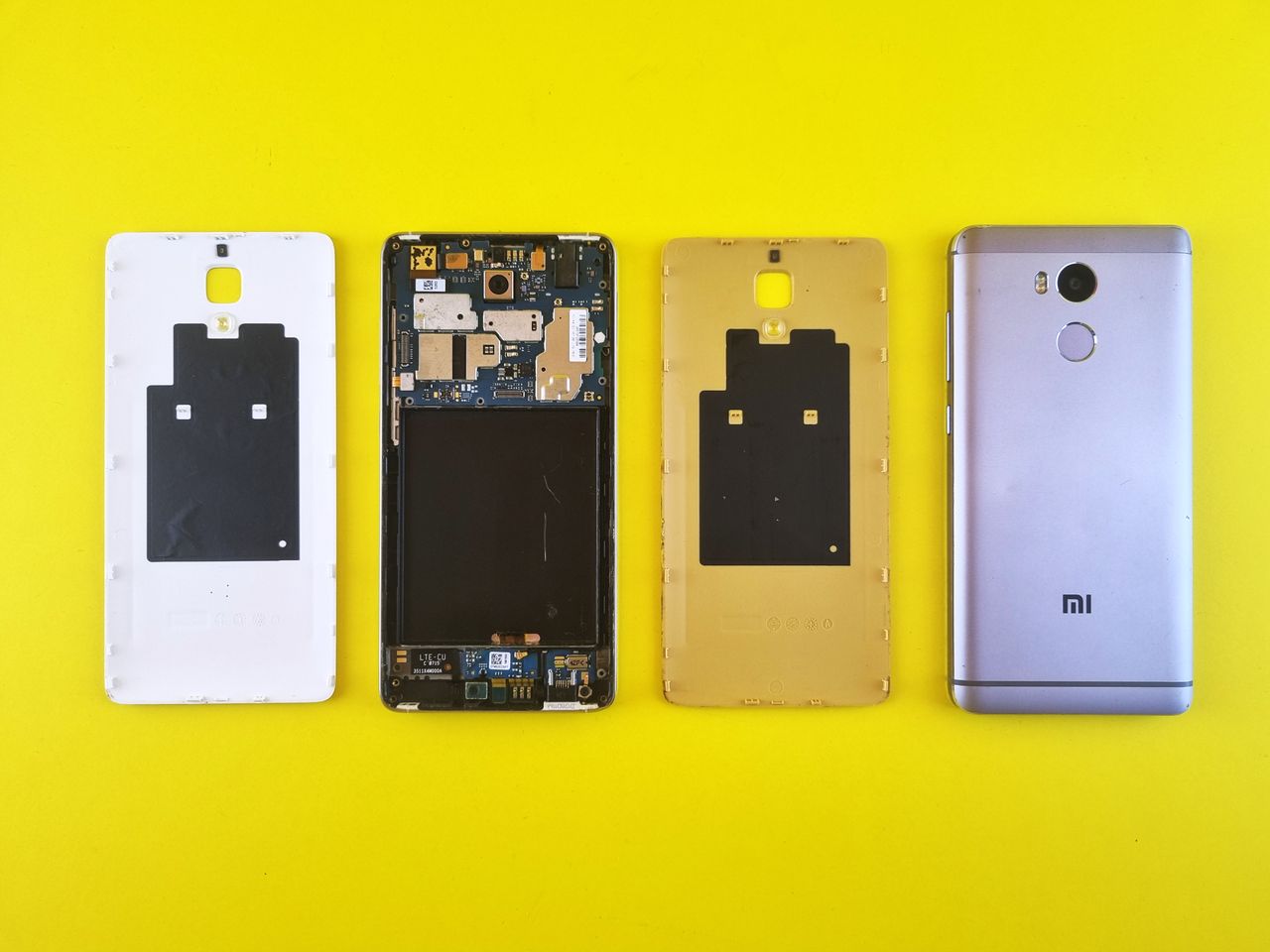
If you are thinking about learning mobile phone repair, one of the first questions you are likely to ask is: What qualification is required for a mobile repairing course, how much does it cost, and how long does it take?
The good news is that you generally do not need a college degree or engineering qualification to start learning mobile repair. However, eligibility depends on the particular course and institute. Government-recognized programs, ITI-related courses and private training institutes can have different entry requirements.
For example, the Directorate General of Training (DGT) lists Smartphone Technician Cum App Tester as a six-month, 600-hour non-engineering trade for candidates who have passed Class 10.
There are also skill-development courses under the Electronics Sector Skills Council of India (ESSCI), including Mobile Phone Hardware Repair Technician, a qualification associated with NSQF Level 4.
This guide explains the different pathways, expected fees, course duration, syllabus and what you should check before paying an institute.
Quick Answer: Mobile Repairing Course Eligibility
For many mobile repair courses in India:
- 10th pass is enough for several structured courses.
- Some private courses accept students with 8th or 10th standard education.
- Some specialized courses require 12th qualification or previous technical experience.
- You generally do not need a degree in electronics.
- Basic knowledge of electricity, electronics and computers can be helpful but is not always mandatory.
- Practical ability, patience and careful handling of small components are extremely important.
The exact eligibility should always be checked with the institute offering the particular course.
What Does A Mobile Repairing Course Teach?
A mobile repairing course teaches you how to diagnose and repair faults in smartphones and mobile phones.
Depending on the level of the course, training may cover:
- Smartphone components and architecture
- Display and touchscreen replacement
- Battery and charging problems
- Charging connector faults
- Speaker and microphone problems
- Camera-related faults
- Network and SIM problems
- Power-related faults
- Software troubleshooting
- Basic motherboard diagnosis
- Soldering and component replacement
- Use of multimeters and other testing equipment
- Safe disassembly and reassembly
- Customer handling and service procedures
A formal NSDC participant handbook for Mobile Phone Hardware Repair Technician describes work involving customer interaction, front-end repair, mobile-phone fault rectification and maintaining a safe working environment.
The important point is that mobile repair is a practical skill. Reading about circuits is useful, but becoming competent requires hands-on practice with tools, components and faulty devices.
Mobile Repairing Course Eligibility After 10th
Can I do a mobile repairing course after 10th?
Yes. Class 10 is sufficient for several recognized smartphone-repair training pathways.
The DGT’s Smartphone Technician Cum App Tester course specifically lists “Passed 10th Class Examination” as its eligibility requirement. It is classified as a non-engineering trade, NSQF Level 3, with a duration of 6 months or 600 hours.
This makes a 10th-pass student a good candidate for entry-level smartphone technician training.
After completing such a course, students can continue developing their skills through practical work, apprenticeships, employment or more advanced electronics training.
Do I need Science in 10th?
Not necessarily.
For the DGT Smartphone Technician Cum App Tester course, the published eligibility is simply Class 10 pass.
However, studying Science can be useful because mobile repair involves concepts such as voltage, current, resistance, circuits and electronic components.
You don’t need to be exceptionally strong in mathematics. What matters more is understanding basic electronics and developing good troubleshooting skills.
Mobile Repairing Course Eligibility After 12th
Students who have completed Class 12 can also enter mobile repair training.
In fact, completing 12th can give you more options because some institutes and specialized programs specify 12th as their entry requirement.
For example, some currently listed private training programs for Mobile Phone Hardware Repair Technician require 12th qualification, while other providers accept lower qualifications. This demonstrates why there is no single eligibility rule for every mobile repairing course in India.
If you have completed 12th, you can choose between:
- Short-term mobile repair courses
- Structured skill-development programs
- Electronics-related ITI/training pathways
- Private practical mobile-repair academies
- Advanced motherboard and micro-soldering training
Is an Engineering Degree Required?
No.
You do not need B.E., B.Tech or another engineering degree simply to become a mobile phone repair technician.
Mobile repairing is a skill-based occupation. A person can develop professional competence through structured vocational training and substantial hands-on practice.
That said, an electronics or electrical background can be advantageous if you want to progress into advanced board-level repair, electronics design or other technical careers.
Mobile Repairing Course Duration in India
There is no universal duration.
Different programs can range from a few months to one year or longer, depending on the syllabus and level.
| Course type | Typical duration | Suitable for |
|---|---|---|
| Basic mobile repair course | Around 1 month | Beginners |
| Short-term practical course | Around 2–6 months | Beginners to intermediate |
| Structured smartphone technician course | 6 months | Students seeking broader training |
| Advanced motherboard/micro-soldering training | Varies | Existing technicians |
| Longer electronics/technical programs | 1–2 years | Students seeking deeper technical education |
These are broad categories, not mandatory national durations.
One clearly defined government pathway is DGT’s Smartphone Technician Cum App Tester course: 6 months / 600 hours.
The older NSDC Mobile Phone Hardware Repair Technician qualification, ELE/Q8104, is listed by NSDC at NSQF Level 4, with a model curriculum showing 400 total hours in the referenced curriculum.
NSDC’s later Qualification Pack booklet also lists a Mobile Phone Hardware Repair Technician qualification at NSQF Level 4 with 600 notional hours, illustrating why course duration should be checked against the specific qualification/version rather than relying on a generic claim such as “the government course is always X months.”
How long does it take to become good at mobile repair?
Completing a course and becoming a skilled technician are two different things.
A short course may teach you the fundamentals, but professional ability develops through repeated practical work.
For example, a beginner may first learn:
Stage 1: Basic components and tools
↓
Stage 2: Disassembly and assembly
↓
Stage 3: Component replacement
↓
Stage 4: Basic fault diagnosis
↓
Stage 5: Software troubleshooting
↓
Stage 6: Board-level troubleshooting
↓
Stage 7: Micro-soldering and advanced motherboard repair
The more advanced stages require considerably more practice.
Here are the 5 best mobile repairing course training institutes in Mumbai for you to consider if you wish to get this technical training in Mumbai.
Mobile Repairing Course Fees in India
Course fees vary considerably.
There is no single official fee applicable to every mobile repairing course.
The price can depend on:
- Institute type
- Course duration
- Practical facilities
- Certification
- Location
- Number of practical sessions
- Tools provided
- Whether components are included
- Basic versus advanced motherboard training
- Online versus classroom delivery
For example, one currently listed training provider advertises a Mobile Phone Hardware Repair Technician course at ₹14,999 for 160 hours, while another provider lists a different course at ₹8,260 for 100 hours. These figures should be treated as examples of market pricing rather than a government-mandated fee.
Maharashtra’s State Board of Skill, Vocational Education and Training also lists Certificate Course in Mobile Phone Hardware Repair Technician (ELE/Q8104) among courses offered at government ITIs, showing that government vocational institutions can provide this type of training.
What is a reasonable budget?
Instead of choosing a course simply because it is cheap, compare:
- Total training hours
- Number of practical sessions
- Tools available
- Trainer’s experience
- Syllabus
- Certification
- Batch size
- Availability of faulty phones for practice
- Board-level training
- Post-course support
A ₹5,000 course with very little practical training may provide less value than a ₹15,000 course with extensive hands-on work.
What Do You Learn in a Mobile Repairing Course?
A good beginner-to-intermediate course should ideally cover both hardware and software troubleshooting.
1. Mobile phone fundamentals
You should learn about:
- Motherboard
- CPU
- RAM and storage
- Display
- Battery
- Charging circuit
- Cameras
- Speakers
- Microphones
- Sensors
- SIM and network components
- Connectors and flex cables
Understanding what each component does makes troubleshooting much easier.
2. Tools and equipment
Students may learn to use equipment such as:
- Digital multimeter
- DC power supply
- Soldering station
- Hot-air rework station
- Soldering iron
- Microscope
- Tweezers
- Screwdriver sets
- Cleaning equipment
- Testing cables and adapters
A beginner should not immediately start experimenting with expensive phones. Practice on suitable training boards or damaged devices under supervision.
3. Hardware repair
Hardware training can include:
- Display replacement
- Battery replacement
- Charging-port repair
- Speaker replacement
- Microphone replacement
- Camera replacement
- Button and flex replacement
- Connector repair
- Basic motherboard diagnosis
4. Software troubleshooting
Depending on the course, students may learn:
- Basic software diagnosis
- Operating-system troubleshooting
- Backup and restore procedures
- Firmware-related troubleshooting
- Factory-reset procedures
- Basic software fault identification
Software procedures vary by manufacturer and model, so training should emphasize legitimate repair methods and proper handling of customer data.
5. Board-level repair
Advanced courses may introduce:
- PCB identification
- Component-level diagnosis
- Short-circuit identification
- Voltage measurement
- Continuity testing
- IC-related troubleshooting
- Jumper techniques where appropriate
- Micro-soldering
Board repair is significantly more difficult than replacing a screen or battery. It requires good hand control, magnification and an understanding of electronics.
Mobile Repairing Course vs. Smartphone Technician Course
These terms can sound similar but may refer to different programs.
A basic mobile repairing course offered by a private institute may concentrate heavily on practical repair work.
A structured Smartphone Technician program may follow a defined vocational curriculum.
For example, DGT’s Smartphone Technician Cum App Tester is officially classified under Electronics & Hardware, is a non-engineering trade, has NSQF Level 3 and lasts six months/600 hours.
The NSDC/ESSCI Mobile Phone Hardware Repair Technician qualification is a separate qualification associated with NSQF Level 4.
Therefore, always check the exact course name, qualification code, NSQF level and awarding organization rather than judging a course only from its title.
Government vs Private Mobile Repairing Courses
| Factor | Government/structured vocational course | Private institute |
|---|---|---|
| Eligibility | Usually clearly specified | Depends on institute |
| Fees | May be comparatively controlled/subsidized depending on program | Wide variation |
| Curriculum | More structured | Can be highly practical or highly variable |
| Certification | Depends on the specific scheme | Depends on provider |
| Practical training | Depends on centre | Must be checked carefully |
| Duration | Defined by course | Can range from weeks to months |
| Advanced repair | Depends on syllabus | Some specialize in board-level work |
Neither category should automatically be considered better.
For mobile repair, practical exposure is extremely important.
How to Choose the Right Mobile Repairing Course
Before paying your fees, ask the institute these questions:
1. How much practical training is included?
This is probably the most important question.
A course that spends almost all its time on theory may not prepare you adequately for actual repair work.
2. Do students work on real faulty phones?
Ask whether students can diagnose actual defective devices rather than simply watching demonstrations.
3. Is motherboard repair included?
If your goal is advanced repair, find out whether the syllabus covers:
- Board diagnosis
- Short detection
- Component testing
- Soldering
- Micro-soldering
- IC-level work
4. What tools are available?
Ask whether the classroom has professional equipment and whether students actually get hands-on access.
5. What certificate will you receive?
Don’t assume that every certificate has the same recognition.
Check:
- Issuing organization
- Qualification name
- Qualification code
- NSQF level, if applicable
- Whether the certificate is linked to a recognized skill-development framework
Skill India Digital Hub explains that certificates for its skill-development programs are awarded by the relevant Sector Skill Council subject to the requirements of the particular program.
6. What happens after the course?
Ask whether the institute provides:
- Internship
- Apprenticeship assistance
- Job assistance
- Business guidance
- Additional practice
- Technical support after completion
Don’t select an institute purely because it promises a job or high income.
Common Mistakes Beginners Make
Choosing a course only because it is cheap
The cheapest course isn’t necessarily the best-value course.
Learning only screen and battery replacement
These repairs are useful, but a technician who wants to handle more difficult jobs needs to understand diagnosis and electronics.
Buying expensive equipment too early
First learn how each tool works. Buying advanced equipment without sufficient knowledge can result in damaged boards and wasted money.
Practising on expensive customer phones
Beginners should develop their skills using appropriate practice devices and under supervision.
Ignoring electrical safety
Incorrect voltage, polarity or connections can damage components and create safety risks.
Believing that a certificate alone makes you a technician
A certificate demonstrates completion of training. Repair ability comes from knowledge plus repeated practical experience.
Can You Start a Mobile Repair Business After the Course?
Yes, mobile repair skills can be used for employment or self-employment.
Possible career paths include:
- Mobile repair technician
- Smartphone service technician
- Electronics repair technician
- Service-centre technician
- Independent repair shop owner
- Board-level repair specialist
- Refurbishment technician
- Used-phone testing technician
However, starting a profitable repair shop involves more than repairing phones.
You also need to understand:
- Customer service
- Pricing
- Spare-parts sourcing
- Warranty handling
- Data privacy
- Inventory management
- Basic accounting
- Shop operating costs
- Quality control
Is Mobile Repairing a Good Career?
It can be a practical career for someone who genuinely enjoys electronics, troubleshooting and hands-on work.
The strongest technicians don’t simply replace parts. They try to understand why a component failed.
For example, if a phone is not charging, replacing the charging connector may solve one problem. But if the connector fails repeatedly, the technician should investigate whether there is another underlying issue.
That diagnostic mindset is what separates basic repair work from advanced technical repair.
A good repair technician does not just replace parts; they diagnose the reason the device failed.
This is also why practical training matters so much.
Frequently Asked Questions
1. What is the minimum qualification for a mobile repairing course?
It depends on the course. Several structured programs accept Class 10 pass candidates. DGT’s Smartphone Technician Cum App Tester course, for example, requires Class 10 pass.
2. Can I do mobile repairing after 10th?
Yes. Class 10 is sufficient for several mobile and smartphone technician programs.
3. Can I learn mobile repairing after 12th?
Yes. Class 12 students can join suitable vocational or private mobile repair programs. Some courses specifically require 12th qualification.
4. How many months is a mobile repairing course?
It depends on the program. Short private courses may last a few months, while DGT’s Smartphone Technician Cum App Tester course has a duration of 6 months/600 hours.
5. How much does a mobile repairing course cost?
There is no universal fee. Current course listings show substantial variation depending on provider, duration and curriculum. Compare the total practical training and certification rather than choosing solely on price.
6. Do I need an engineering degree to become a mobile technician?
No. A degree is not generally required for entry-level mobile repair work.
7. Is mobile repairing difficult to learn?
The basics can be learned relatively quickly, but advanced motherboard repair and micro-soldering require considerably more practice.
8. Which is more important: certificate or practical skill?
Both can have value, but practical skill is essential for actually repairing devices successfully. A certificate cannot substitute for hands-on ability.
Conclusion
The mobile repairing course eligibility in India is generally accessible to students without an engineering background. For many courses, Class 10 is enough, while other programs may require Class 12, ITI qualifications or previous experience.
The most clearly defined government pathway discussed here is DGT’s Smartphone Technician Cum App Tester, which accepts 10th-pass candidates and runs for six months/600 hours.
For more specialized mobile hardware repair, NSDC/ESSCI also has a Mobile Phone Hardware Repair Technician qualification associated with NSQF Level 4.
Course fees vary widely, so don’t choose a training centre simply because it advertises the lowest price. Look closely at practical hours, equipment, syllabus, trainer expertise, certification and opportunities for hands-on practice.
If your long-term goal is to become a professional technician or open your own repair shop, start with the fundamentals and gradually progress from basic component replacement to fault diagnosis, motherboard repair and micro-soldering.
The best course is not necessarily the longest or most expensive one. It is the one that gives you structured knowledge, substantial practical experience and a clear path to becoming a competent technician.
FAQs
What qualification is needed for mobile repairing?
For many courses, Class 10 is sufficient. Requirements vary by institute and qualification.
How long is a mobile repairing course?
It can range from a few months to longer vocational programs. DGT’s Smartphone Technician Cum App Tester course is six months/600 hours.
What are mobile repairing course fees in India?
Fees vary substantially by institute and course type. Always compare practical hours, facilities and certification before enrolling.
Can a 10th-pass student become a mobile repair technician?
Yes. Several structured programs accept Class 10 pass candidates.
Is mobile repairing a good business?
It can be, but success depends on technical ability, customer service, spare-parts quality, pricing, location and business management.